Childhood cancer lobbyist, Ryan-Thomas Quinn, has released a statement in response to the Core Participant Closing Statements to the Scottish Hospitals Inquiry.
Ryan-Thomas said: “Today, NHS Greater Glasgow and Clyde have finally admitted partial responsibility for the infected water scandal at the Queen Elizabeth University Hospital in Glasgow.
“Unfortunately, this is information that I have believed in my heart to be true for some time. My best friend Aaron was in a children’s cancer ward in that very hospital in 2018. I remember absolutely vividly him describing his fear to me of the secrecy and panic that stunk out the atmosphere of that hospital. Millie Main was a leukaemia patient; in 2017, she was just 17 when she died of bacterial infection in the Queen Elizabeth. That infection came from the contaminated water supply in that hospital.
“To the board of NHS Greater Glasgow and Clyde, to former Scottish Health Secretary, Jeane Freeman, and to former First Minister Nicola Sturgeon, who presided over this scandal, I have a very simple message: shame on you.
“And directly to you Ms. Sturgeon: as you complete your farewell tour around Scotland, flogging off signed copies of your book for £30 a pop, I hope the memory of the children with cancer that were killed by the dodgy tap water in that hospital, the hospital that your government presided over, and the scandal which your government knew about, I hope they absolutely haunt you.
Because let me be absolutely clear; even if you choose to forget, the history books will remember.”
Scotland’s higher and further education system is one of the few in the world to offer tuition-free undergraduate study for students. Since the scheme was introduced in 2007-08, 740,000 students have benefited from the policy. (Scottish Parliament)
Tuition fees for Scottish-domiciled undergraduate students are paid on their behalf by the Scottish Government, through the Student Awards Agency Scotland (SAAS) (Scot Gov). For students, this means no bills or loans for their education, a stark contrast to the rest of the UK.
But tuition isn’t ‘free’ in an economic sense; Scottish universities still charge a tuition cost, typically £1,820 per year for a Scottish-domiciled student, which SAAS pays on their behalf. Combined with the Scottish Government’s main teaching grant, it equals about £7,610 per student per year in public funding. (IFS) Crucially, that per-student funding has not kept up with inflation. After accounting for inflation over the last decade, research shows that public funding for Scotland’s higher educational institutions is about 19% lower in real terms than it was in 2014, meaning they receive significantly less resource today, while expected to deliver the same service as the past. (IFS)
A positive outcome from the policy however is the difference in average student debt between Scotland and the rest of the UK. Data from the Student Loans Company (SLC) shows that English graduates now carry an average loan balance of about £53,000 by the time they enter the repayment threshold, while Scottish graduates typically have far lower debts, averaging around £17,000.
One of the core arguments for free tuition is widening access and enabling those from lower-income and underrepresented backgrounds to complete higher education. Scottish Government figures indicate that since the scheme was first introduced, the number of Scottish students studying at degree level has grown by roughly 27% (Scot Gov).
However researchers have found that lifting out-of-pocket fees does not automatically level the playing field; in the 2024-25 academic year, 43.7% of the most advantaged students secured a place in higher education, compared with just 15.4% of the least advantaged, meaning those better off were 2.84x more likely to progress upwards in education than those who were not. (UCAS)
It is more reasons like this that the scheme has become increasingly unpopular in Scotland. A recent poll commissioned by the Carnegie Trust found that nearly half (48%) of voters in the upcoming Scottish Parliamentary election would support charging tuition fees based on ability to pay, marking a clear shift in public opinion amid growing scrutiny of the current funding model. (Carnegie Trust) (IPSOS)
And at the same time, campuses across Scotland have felt budgetary strain. Recent reports have described significant job cuts at Dundee University, and a multi-million-pound deficit mitigation package at the University of Edinburgh.
Scotland’s free tuition policy is rooted in a clear principle that education should be based on potential to achieve, not the ability to pay. In terms of graduate debt reduction, the policy has undeniably achieved this. Yet the data also makes clear that ‘free’ does not mean costless. The investment from public funds to sustain the model is substantial at approximately £715m per annum. So, while the policy has succeeded in certain aspects, like lowering debt, it has failed in others, including widening participation and financial sustainability. Going forward, with growing public discontent and costs rising, the new Scottish Government elected in May will face a challenging task going forward: Should the scheme remain as is? Or should contributions align more with household wealth?
The inevitable answer will shape Scottish higher education for years to come, but the numbers suggest that there will be no easier option.
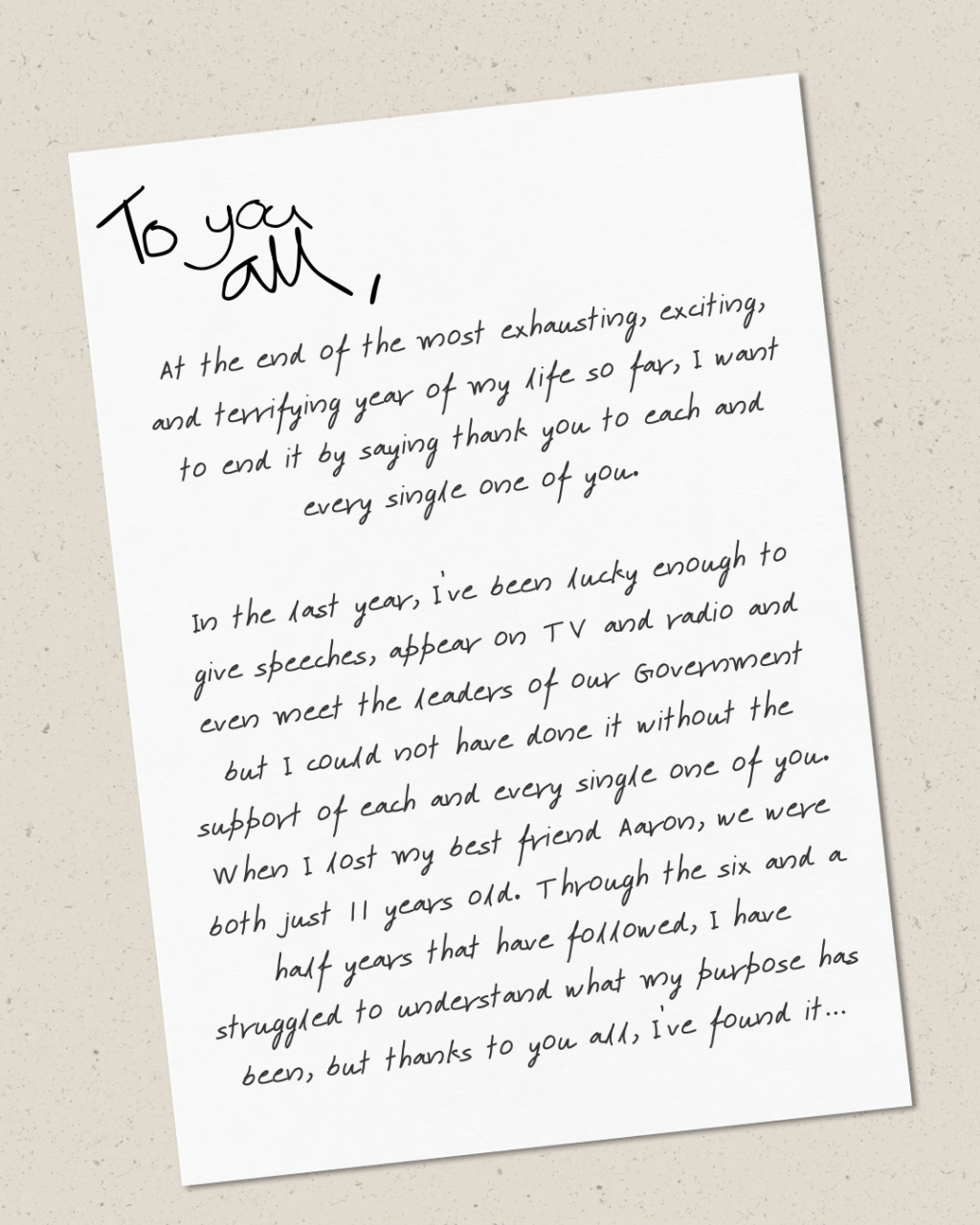
“At the end of the most exhausting, exciting and terrifying year of my life so far, I want to end it by saying thank you to each and every single one of you.
“In the last year, I’ve been lucky enough to give speeches, appear on TV and radio and even meet the leaders of our government but I could not have done it without any of you.
“When I lost my best friend Aaron, we were just 11 years old. Through the six and a half years that have followed, I have struggled to understand what my purpose has been, but thanks to you all, I’ve found it.
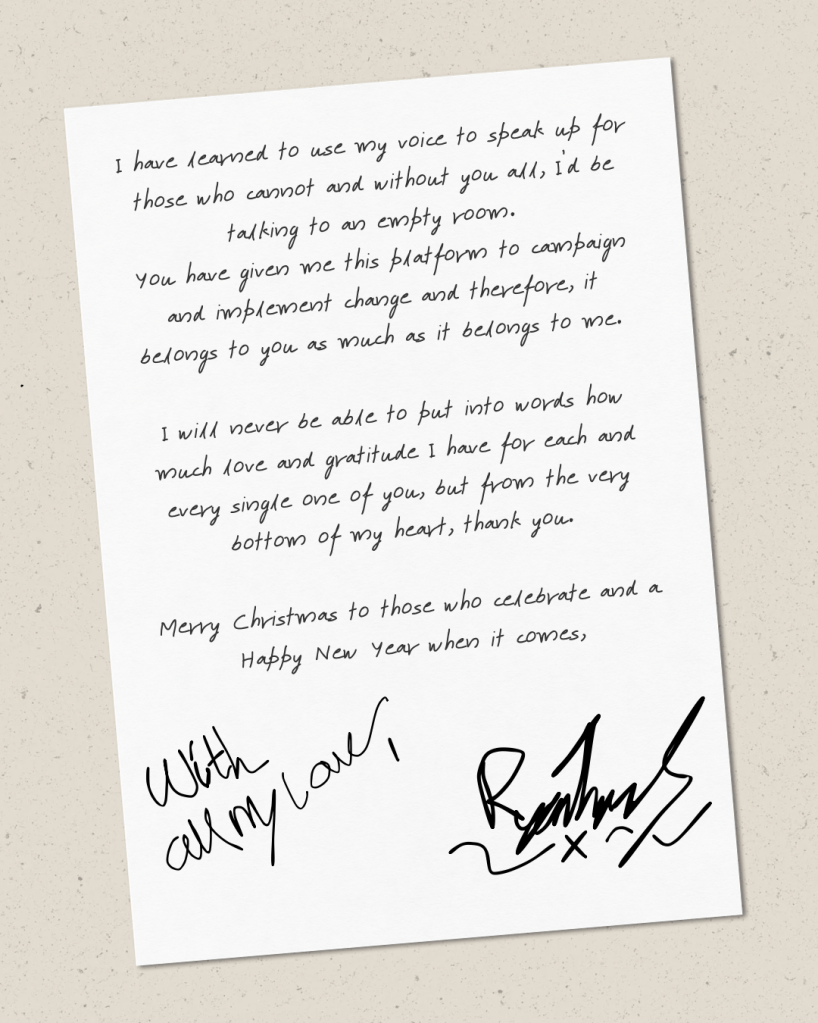
“I have learned to use my voice to speak up for those who cannot and without you all, I’d be talking to an empty room. You have given me this platform to campaign and implement change and therefore, it belongs to you as much as me.
“I will never be able to put into words how much love and gratitude I have for each and every single one of you, but from the very bottom of my heart, thank you.
“Merry Christmas to those who celebrate and a Happy New Year when it comes, with all my love, Ryan-Thomas”
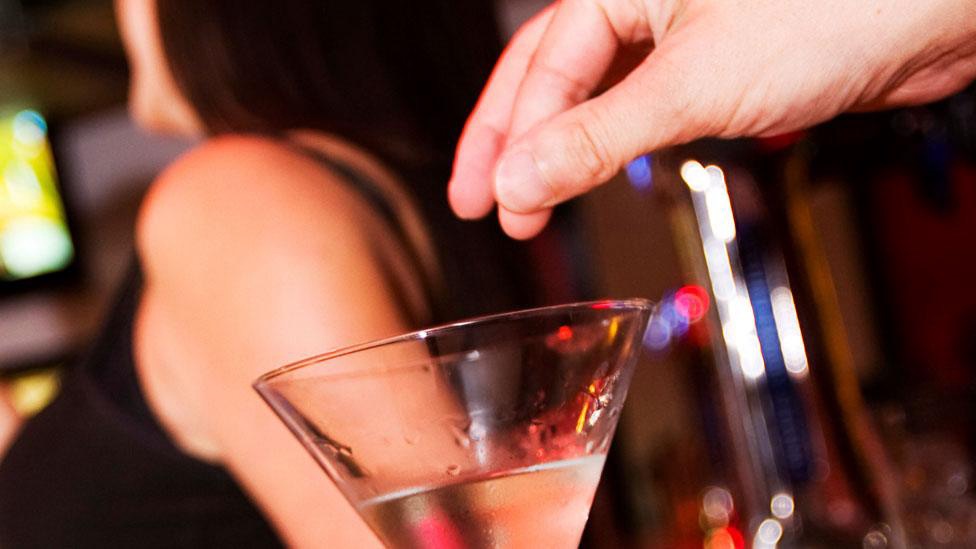
So if you’ve seen my Instagram, you’ll know that I was spiked on Monday. A quiet post-work few glasses of rośe zinfandel became me, slumped unconscious on the floor of a Wetherspoons toilet.
DO NOT leave your drink unattended…
Sitting next to the bar, I thought that I could go to the toilet and come back, knowing there would be staff in close proximity to my drink and it would be fine. I was wrong.
Within less than 20 minutes of me finishing the drink after I returned, I started to feel ‘high’. I excused myself from the table, started walking to the bathroom, realised I couldn’t see, and fell through a door and luckily was held up by someone in there. I vaguely remember getting myself into a toilet cubicle, throwing up, and then nothing. Apparently I was blacked out, slumped over the toilet bowl for half an hour.
An ambulance was called, paramedics arrived and then I woke up. It took me a while to figure out where I was and what had happened, and as I became more alert and started to reply to questions about what I had drank, I know my limits, I know what being drunk feels like.
This was not drunk. I had the realisation I had been spiked.
And I was back to normal within an hour, because the drugs these, to put it bluntly, disgusting weird cunts use are only meant to work long enough so they can satisfy themselves.
What to do if you think you have been spiked?
Immediately tell someone that you trust that you do not feel well and think you have been spiked.
Stop drinking alcohol.
Get to a safe place. This could be behind the bar, outside, or in a quiet corner.
Tell staff and ask them to phone for medical help on 999.
And most importantly, if someone unfamiliar comes up to you in this time, do not engage with them. It doesn’t matter how well meaning their intentions are or not, politely tell them to fuck off.
It was great to be invited on to the Talking Teens podcast, where I was interviewed by four brilliant young people, Morgan (16), Peter (15), Emma (15) and Mirran (14).
It was great to discuss the current state of the Scottish education system and desperate need for reform, my experience starting high school after Aaron’s death, and of course the pandemic and lockdowns.
Five First Ministers, four hundred million wasted on ferries with painted on windows, three high-profile arrests, two recent by-election defeats and one dodgy campervan. That is not even the worst of the abysmal record of the Scottish National Party.
Last year, 800 Scots died because of long waits for treatment in accident and emergency and one in six of us are stuck on an NHS waiting list.
The educational attainment gap between rich and poor is worsening, and funding for colleges has been slashed by 20%.
The new HMP Glasgow, which will house murderers, rapists and peadophiles, according to official plans will feature ‘beautiful, landscaped gardens’, an orchard and an amphitheatre. The prison is now nine years late, ten times over budget and associated costs have rocketed to over one billion pounds. For context, the new five-star Atlantis Hotel in Dubai, which contains over 1,500 bedrooms, a shopping mall, an aquarium, an array of restaurants and even a waterpark with 105 slides has cost the same.
After 18 years of SNP incompetence and managed decline, Scotland cannot afford for this to go on any longer. The country I love desperately needs a new direction, and that is why I will be voting for Scottish Labour, led by Anas Sarwar, at the Scottish Parliamentary Election next year.
Anas Sarwar worked as an NHS dentist before his entry to politics. Working in one of the most deprived areas in Scotland, he has seen first hand the abandonment of that and similar communities by the SNP Scottish Government.
Elected as the leader of Scottish Labour in 2021, he became the first Muslim to lead a political party in the UK. He has turned Labour’s fortunes around in Scotland, with the party winning a landslide in our country at last years general election and more recently the Hamilton, Larkhall and Stonehouse by-election, the first time the seat was won by Labour since 2011.
Unfortunately however, Anas has been the target in a slew of racism from figures in Reform UK. In an online campaign during that by-election, they said that he would: “prioritise the Pakistani community” if he became First Minister.
At the time, a spokesperson for Sarwar said: “This is a blatantly racist advert from Reform UK that attempts to question his identity, loyalty and belonging.
“Anas was born in Scotland and has lived here all his life. He is a proud Scot who has worked in our NHS.”
His education was also referenced recently by SNP leader and First Minister John Swinney, who said: “I don’t think this state school boy being lectured about elitism is a great work for Mr. Sarwar” in response to a question asked by him about the state of the Scottish education system.
Simply, it does not have to be like this.
Swinney and Farage clearly fear Anas Sarwar, because why else would they be launching personal attacks to question his morals?
Rule number one of good politics; insult the policy, not the person.
John Swinney and The SNP know they are deeply unpopular, and face an uphill battle to maintain power.
Reform UK know that a centre-right party cannot win power in a centre-left and progressive country like Scotland.
However, it would be wrong of me to suggest that the UK Labour Government has got everything right and that everything has gone to plan. That would be a lie.
However Keir Starmer is not running to be Scotland’s next First Minister. Anas Sarwar is.
But Labour have made achievements since they came to power; 1,000 GPs have been hired to end the 8am scramble, 500,000 more childrenare in receipt of free-school meals, and they’ve introduced free breakfast clubs to ensure children never go to school hungry.
But Scotland will not see any of this, because the SNP Scottish Government, which have control of the NHS and education have so-far refused to follow suit.
In England, NHS waiting lists are going down, but in Scotland, they are going up.
In England, 500,000 more children are now in receipt of free school meals. In Scotland, the SNP abandoned their promise to roll them out for all primary school children.
In England, Labour have opened 3,000 new school based nurseries. In Scotland, parents and carers are forced to pay out hundreds of pounds a month for private childcare.
If the SNP had a good idea on how to fix the issues that they themselves have caused, they would have had it long before now.
Instead, they’ve pressed the nuclear button. Their record in government is so abysmal and impossible to campaign on, they’ve resorted to talking up independence and Farage to attempt to distract voters from the mess they’ve caused.
They’ve wasted billions of pounds of our money on prisons, ferries, and court cases to try and score political points. Their former CEO has even been charged with the alleged embezzlement of their own members donations, so with that in mind, why should we trust them with our hard earned money? The answer is that we shouldn’t.
To finish. I’d like to ask you a question. Do think Scotland is the best it can be?
If your answer is no, I assume that you, like me, believe Scotland deserves and needs a new direction. That will only be achieved by Anas Sarwar and a strong, Scottish Labour government elected next year.
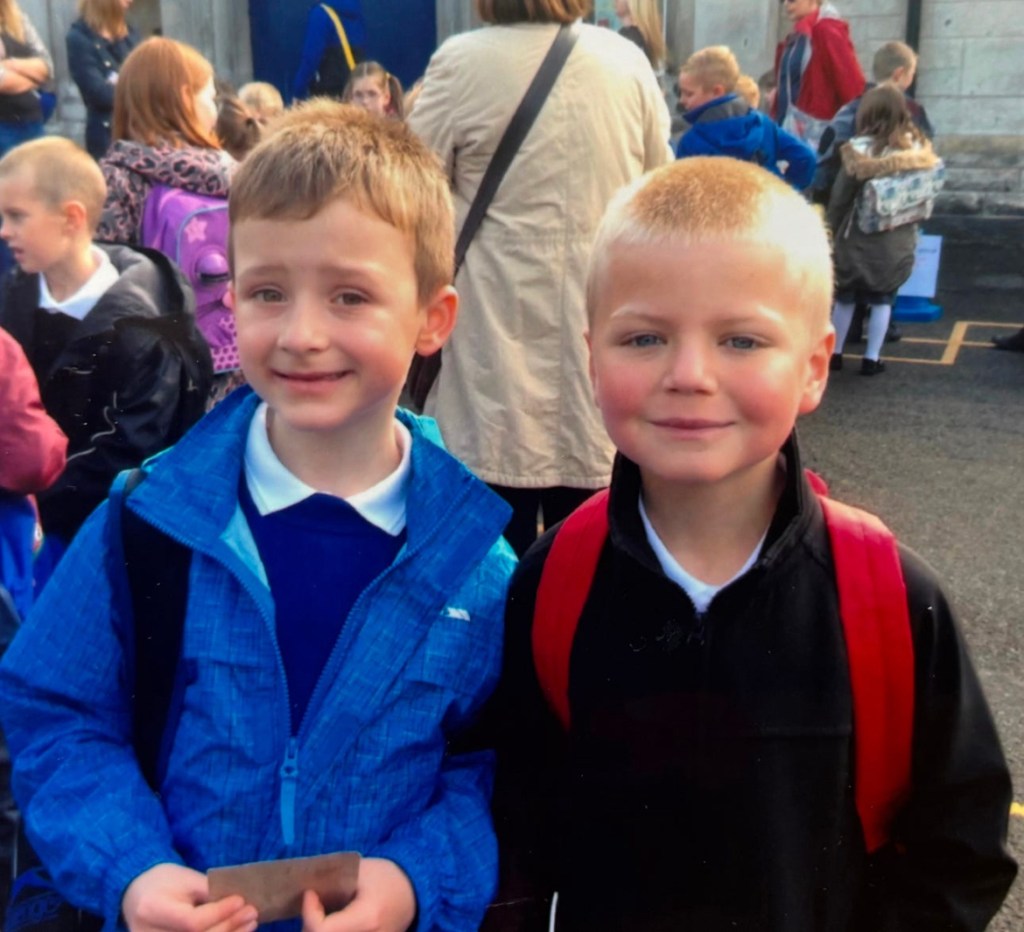
The photo below was taken on the 20th of August 2014. It was me and my best friend Aaron’s first day of primary three.
Little did I know, 4 years, 9 months and 14 days after this photo was taken, Aaron would pass away from Cancer, at just eleven years old.
denial
On the 31st of May 2019, I was picked up by my parents from school unexpectedly, at about 2:30pm, half and hour before I was due to finish. I was meant to be visiting Aaron in hospital that evening, and I assumed I’d be going to see him earlier. I was so excited.
The atmosphere in the car on the way home was eerie. It was silent. There was no conversation. Did I know what was coming? Absolutely, could I admit that to myself? No.
When home, in the living room that I’m currently writing this in, my Mum sat down next to me and put her arms around me. ‘Aaron’s gone, Ryan.’ she said.
‘Gone where?’ I immediately asked myself. And then the realisation hit.
Aaron was dead.
Aaron was eleven years old, his twelfth birthday in exactly three weeks, but he was dead.
How does anyone comprehend that? Let alone a yet-undiagnosed autistic eleven year old. The answer is that they can’t.
Even now, sometimes, I have dreams of a grown-up and still alive Aaron. When I wake up, there is that split-second where I am in denial over Aaron’s passing, and that he is still here. But then I remember he’s not, and this whole stage starts all over again.
anger
In the days, weeks, and months after Aaron’s passing, I was consumed by an overwhelming sense of anger. I regularly broke down, I smashed my house up, and to put it bluntly, I wanted the blood of whoever let this happen to my best friend.
I was even angry at myself.
So angry at myself in-fact, I had thoughts of ending my own life, not because I wanted to, but because I was consumed by such anger and hatred of the world that allowed this to happen.
I didn’t want to be apart of it.
Luckily, through intervention’s from charities like Team Jak, and support from CAMHS, my inner hatred subsided, and the thoughts slowly disappeared.
However, I still feel a sense of anger about the situation.
Anger towards the GP who misdiagnosed him twice.
Anger towards the clinicians who treated him like a test subject instead of a child.
Anger towards the disease that took his life, before he’d even had the chance to live.
bargaining
‘What if Aaron was still here, what would he do?’
‘What if I had told him I was Gay?’
‘What if the consultants, doctors, nurses and scientists had done more?’
The list goes on. Now, the questions I ask myself have changed. Some are still ‘what if?’ but most are now ‘what would?’. I ask myself the question daily;
‘What would Aaron think of what I’m doing?’
That thought was especially prevalent during my recent meeting with the Health Secretary.
There was one empty chair at the table.
I am confident that Aaron was sat in it, and I hope I did him proud.
depression
Last year, I was diagnosed with Post Traumatic Stress Disorder.
There is a common misconception that PTSD is something that ‘only people in the army get’.
That is simply a lie.
Yes, my PTSD was probably triggered by Aaron’s passing, however, unfortunately last year, I learned the hard way, that sometimes, I trust and love the wrong people.
Through this experience, I also learned that grief isn’t just something we experience after a death of a loved one, it’s something that we experience after any traumatic event.
Now, I take Sertraline, which is an anti-depressant. It has made a massive positive impact on my mental health. Without it, I wouldn’t be able to write this out of fear and anxiety. One day, I will stop taking them, and I will still be happy. But, for now, they help me, and I am not ashamed of that in the slightest.
acceptance
If you asked me of my opinion, I would say that there is only four stages of grief, and acceptance isn’t one of them.
Grief isn’t something that ever goes away.
The emotions stay and the upset stays.
The only thing that changes is that you adapt to living with that sadness.
Is that acceptance? It could be, however I am not sure.
One day, I may discover the answer, but for now, I’m in the dark.
my conclusion
Aaron’s last words to me were ‘Live your life for me, Ryan.’.
Despite the burden of sadness that I have carried with me throughout my childhood, and as I approach adulthood I will undoubtedly continue to carry, I am determined to honour his request.
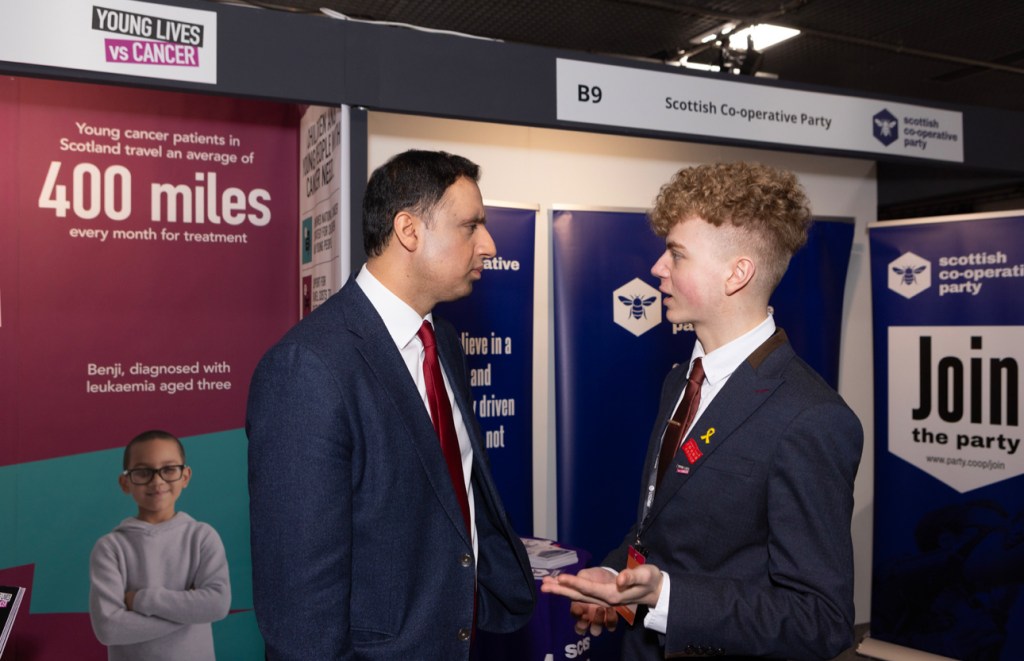
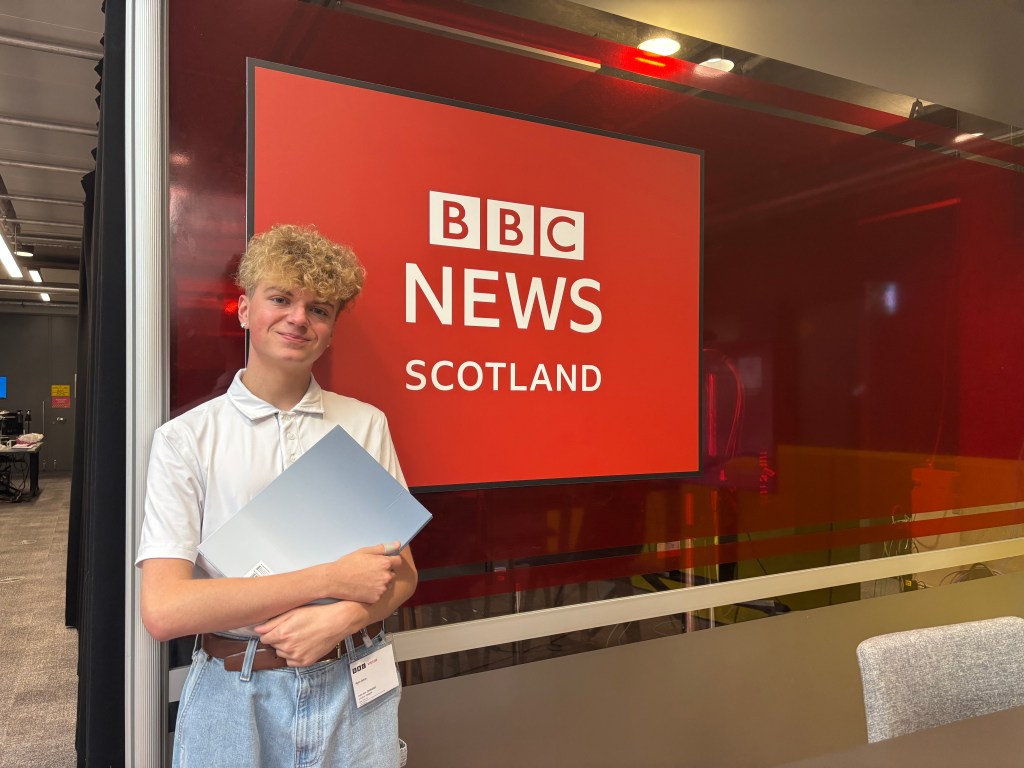
That is why last year, I did a skydive in aid of the charity that saved my life. That is why this year I spoke to thousands of people about Aaron and the desperate state of our NHS. That is why I met with the Health Secretary to bring Aaron’s story to the Government, and that is why I gave an interview to the BBC about my struggle with grief in light of Aaron’s 18th Birthday next week.
Grief is not a linear process. Grief is a lifelong detriment on an individuals ability to cope. But grief does not define you, and in my case, it is the detriment that empowers me to continue Aaron’s legacy.

 Ryan-Thomas’s Blog
Leave a comment